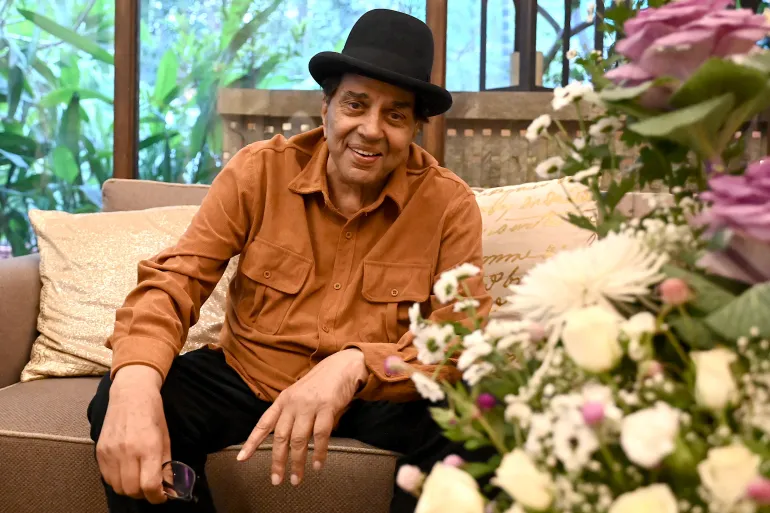
Dharmendra, fondly known as the “He-Man of Bollywood,” is one of the most iconic and enduring stars in the history of Indian cinema. With a career spanning over six decades, Dharmendra has left an indelible mark as an actor, producer, and cultural icon. Known for his rugged masculinity, romantic charm, and powerful screen presence, he ruled Bollywood from the 1960s through the 1980s and continues to be respected and admired across generations.
From intense action roles to soulful romantic performances, Dharmendra’s versatility made him a favorite among audiences and filmmakers alike. Even today, his legacy lives on through his films, awards, and his family, which includes some of the biggest names in the Indian film industry. This article explores Dharmendra’s life, career, achievements, and lasting influence on Indian cinema.
Early Life and Background of Dharmendra
Dharmendra was born as Dharam Singh Deol on December 8, 1935, in Nasrali village, Ludhiana district, Punjab, British India. He grew up in a modest Punjabi Jat family and was deeply influenced by rural life, which later reflected in his grounded personality and relatable on-screen roles.
As a young man, Dharmendra was passionate about films and often watched movies at local theaters, dreaming of becoming an actor. His journey into Bollywood was not easy, but his determination and raw talent helped him stand out in an industry that was already highly competitive.
Entry into Bollywood and Early Struggles
Dharmendra entered the film industry after winning a Filmfare talent contest in the late 1950s. He made his acting debut in “Dil Bhi Tera Hum Bhi Tere” (1960). While the film did not achieve massive success, it marked the beginning of a remarkable career.
Initially, Dharmendra struggled to find his footing. However, his strong physique, expressive eyes, and natural acting ability soon caught the attention of filmmakers. His early roles often portrayed him as a romantic hero, which helped him build a loyal fan base.
Rise to Stardom in the 1960s and 1970s
The 1960s and 1970s were transformative decades for Dharmendra. He became one of the most sought-after actors of his time, delivering multiple hits across genres.
His performances in romantic films like “Phool Aur Patthar” (1966), “Anokhi Ada” (1973), and “Satyamev Jayate” showcased his emotional depth, while action-packed films such as “Mera Gaon Mera Desh” (1971) and “Sholay” (1975) established him as a powerful action star.
Dharmendra earned the title “He-Man” due to his physically strong roles and intense action sequences, something that was relatively new in Bollywood at the time.
Dharmendra in Sholay: A Career-Defining Role
No discussion about Dharmendra is complete without mentioning “Sholay” (1975), one of the greatest films in Indian cinema history. His role as Veeru, a fearless yet emotional outlaw, became legendary.
Originally, Dharmendra wanted to play the role of Gabbar Singh, but he eventually accepted Veeru’s character, which turned out to be one of the most iconic roles of his career. His chemistry with Amitabh Bachchan and his performance in both action and emotional scenes were widely appreciated.
Versatility as an Actor
One of Dharmendra’s biggest strengths was his versatility. He effortlessly transitioned between:
- Romantic roles
- Action-packed characters
- Comedy performances
- Serious and emotional roles
Films like “Chupke Chupke” (1975) proved his exceptional comic timing, while movies such as “Bandini” (1963) highlighted his ability to handle complex, emotionally intense characters.
This wide range helped Dharmendra maintain longevity in an industry where many actors fade after a few successful years.
Dharmendra’s Filmography Highlights
Below is a table highlighting some of Dharmendra’s most notable films across different decades:
| Year | Film Name | Role Type | Significance |
|---|---|---|---|
| 1960 | Dil Bhi Tera Hum Bhi Tere | Romantic | Debut film |
| 1966 | Phool Aur Patthar | Romantic | Breakthrough role |
| 1971 | Mera Gaon Mera Desh | Action | Established “He-Man” image |
| 1975 | Sholay | Action/Drama | Career-defining classic |
| 1975 | Chupke Chupke | Comedy | Showcased comic talent |
| 1987 | Hukumat | Action | One of the biggest hits of the 80s |
| 2011 | Yamla Pagla Deewana | Comedy | Successful comeback |
Dharmendra as a Producer
Apart from acting, Dharmendra also ventured into film production. He established Vijeta Films, under which he produced critically acclaimed movies like “Betaab” (1983) and “Ghayal” (1990).
These films not only launched his sons Sunny Deol and Bobby Deol but also contributed significantly to Bollywood’s action-drama genre. His role as a producer showed his understanding of cinema beyond acting.
Personal Life and Family Legacy
Dharmendra’s personal life has always attracted public attention. He was first married to Prakash Kaur, with whom he has four children, including actor Sunny Deol. Later, he married legendary actress Hema Malini, and the couple has two daughters, Esha Deol and Ahana Deol.
The Deol family is one of Bollywood’s most influential film families, with multiple generations contributing to Indian cinema. Dharmendra’s values, discipline, and passion for films are clearly reflected in his children’s careers.
Awards and Honors Received by Dharmendra
Over the years, Dharmendra has received numerous awards and honors for his contribution to Indian cinema:
- Filmfare Lifetime Achievement Award
- Padma Bhushan (2012) – India’s third-highest civilian award
- Multiple Filmfare nominations
- Recognitions from various film festivals and institutions
These honors reflect the respect and admiration he commands within the film industry.
Dharmendra’s Influence on Indian Cinema
Dharmendra played a crucial role in shaping the action-hero image in Bollywood. Before him, action roles were limited, but his performances made physical strength and intense emotions a mainstream appeal.
He inspired future generations of actors and set a benchmark for balancing commercial success with meaningful performances. His dialogue delivery, body language, and emotional expressiveness remain a reference point for aspiring actors.
Dharmendra in Modern Times
Even in his later years, Dharmendra has remained active and relevant. He continues to make special appearances, engage with fans, and express his love for poetry, farming, and Punjabi culture.
His presence on social media has further strengthened his connection with younger audiences, proving that true stardom transcends age and time.
Conclusion
Dharmendra is not just an actor; he is a phenomenon in Indian cinema. His journey from a small village in Punjab to becoming one of Bollywood’s greatest legends is both inspiring and remarkable. With unforgettable performances, timeless films, and a lasting legacy, Dharmendra has earned his place among the greatest stars India has ever produced.
His life reflects dedication, humility, and an unwavering love for cinema. As audiences continue to revisit his classics and celebrate his contributions, Dharmendra remains a shining example of what it means to be a true legend of Indian cinema.
